
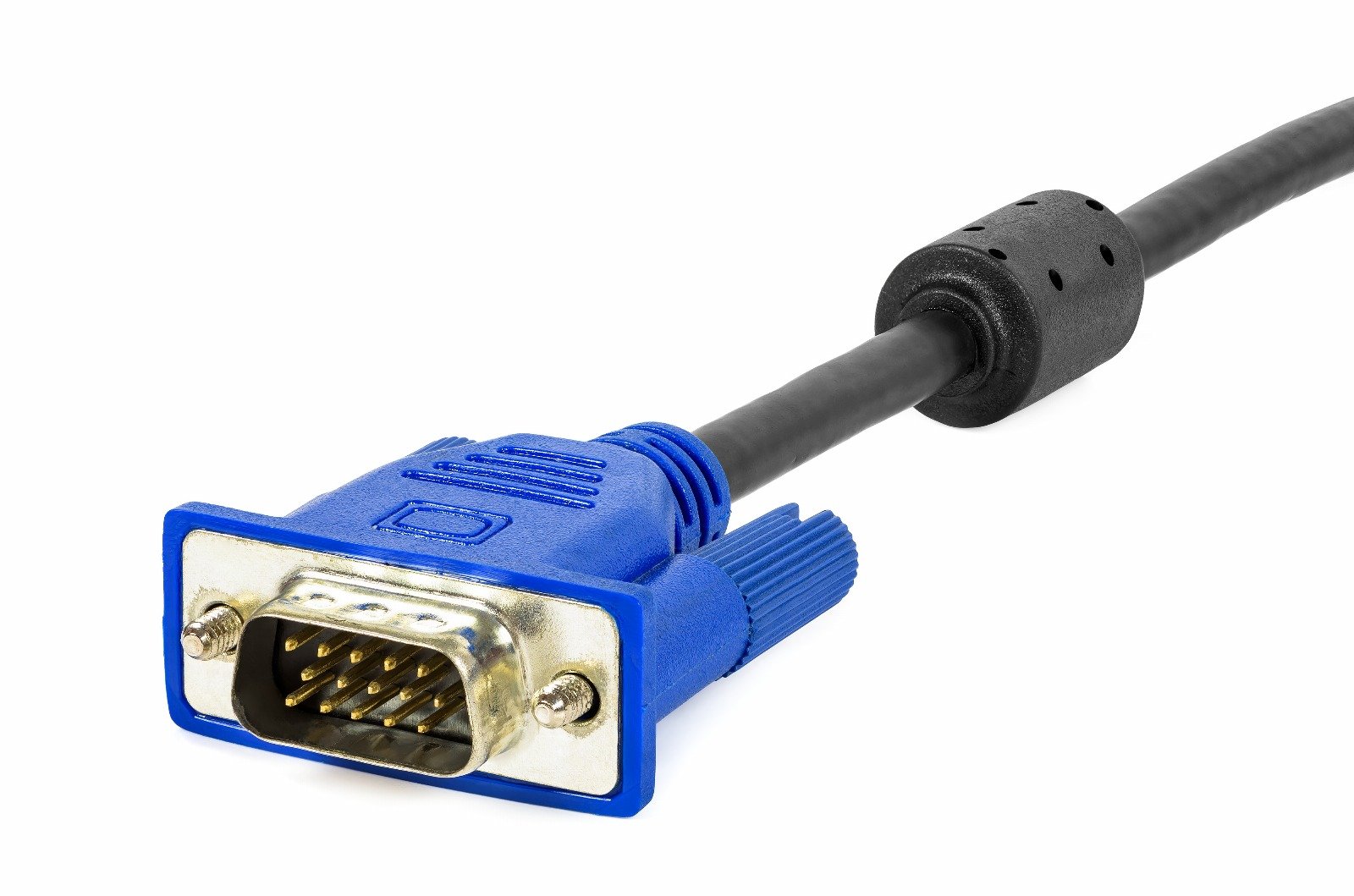
VGA is one of the oldest video connection standards still in use today, introduced by IBM in 1987. It primarily transmits analog video signals and has been the standard interface for computer monitors, projectors, and some high-definition television sets for many years. The connector itself features 15 pins in three rows and typically uses a blue-colored connector to easily differentiate it from other interfaces. VGA can support resolutions up to 2048x1536 (QXGA), but it is most commonly used at lower resolutions like 640x480 (standard VGA) or 800x600.
Despite its age, VGA remains prevalent in various applications due to its universal compatibility. Schools, businesses, and other organizations often use VGA due to the extensive availability of older projectors and monitors that require an analog signal. Since VGA transmits an analog signal, it is susceptible to signal degradation over long distances or with poor-quality cables, which can result in lower image quality compared to digital standards like HDMI or DisplayPort.
Pros:
- Universal Compatibility: VGA is widely supported across a vast range of devices, including older equipment, making it versatile for legacy systems.
- Simplicity: The technology is straightforward and widely understood, making troubleshooting and support easier.
- No DRM Restrictions: VGA does not involve digital rights management, allowing unrestricted content sharing between devices.
Cons:
- Lower Image Quality: Analog signals are more prone to degrade over distance and interference, often resulting in poorer image quality, especially at higher resolutions.
- Bulkier Connector: The VGA connector is relatively large and not well-suited for modern, slim devices.
- Lacks Audio Support: VGA only transmits video. Audio requires a separate connection, which complicates setup and adds to cable clutter.
VGA's longevity is a testament to its initial design and utility, providing a simple, effective solution for video transfer in an era before digital video became mainstream. However, as newer technologies offering sharper images, integrated audio, and smaller connectors dominate the market, VGA's relevance is steadily declining, primarily reserved for situations where newer connections are not feasible.