
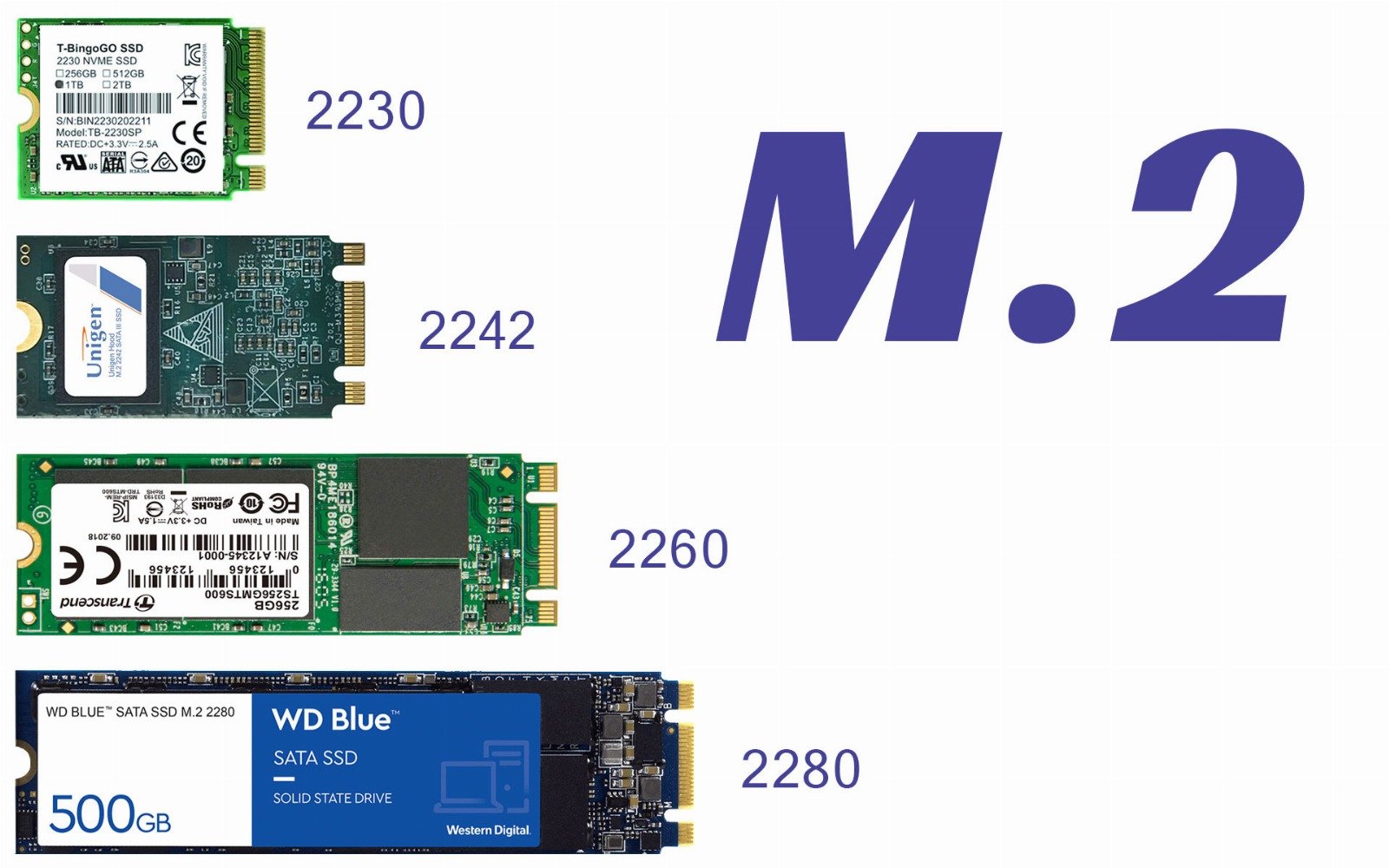
M.2 is a specification for internally mounted computer expansion cards and associated connectors. It replaces the mSATA standard, offering a more flexible and faster alternative for using PCIe (Peripheral Component Interconnect Express), SATA, and USB interfaces on a single card. M.2 is commonly used for solid-state drives (SSDs) and is increasingly found in laptops, desktops, and even some servers due to its compact size and versatility.

The M.2 specification supports various module sizes and can accommodate different types of interfaces, allowing devices like Wi-Fi, Bluetooth, and WWAN to utilize it. For SSDs, M.2 cards can utilize both SATA and PCIe interfaces, with PCIe versions offering significantly faster data transfer speeds than SATA. The most common size for M.2 SSDs is 22mm wide by 80mm long (labeled as 2280), but several lengths are available to fit different system requirements.
Pros:
- High Speed: When using the PCIe interface, M.2 supports higher data transfer rates compared to SATA, significantly improving performance for tasks such as booting up systems, loading software, and transferring data.
- Compact Form Factor: The small footprint of M.2 cards makes them ideal for thin and compact devices, such as ultrabooks and small form factor PCs, without sacrificing performance.
- Versatility: M.2 supports a variety of interfaces and can be used for multiple purposes beyond SSDs, including connectivity cards like WiFi and Bluetooth.
Cons:
- Heat Production: High-performance M.2 PCIe SSDs can generate substantial heat under heavy use, which might require additional cooling solutions in compact builds.
- Cost: M.2 PCIe SSDs are generally more expensive per gigabyte than their SATA counterparts, reflecting their advanced capabilities.
- Compatibility: Not all systems have M.2 slots, and among those that do, not all support PCIe or NVMe interfaces, which can limit the upgrade options.
M.2 is a significant development in computer storage and expansion technology, providing high-speed performance in a compact size. It is particularly beneficial for users looking to enhance the capabilities of portable devices or anyone who needs to maximize the performance and space efficiency of their computing hardware.