
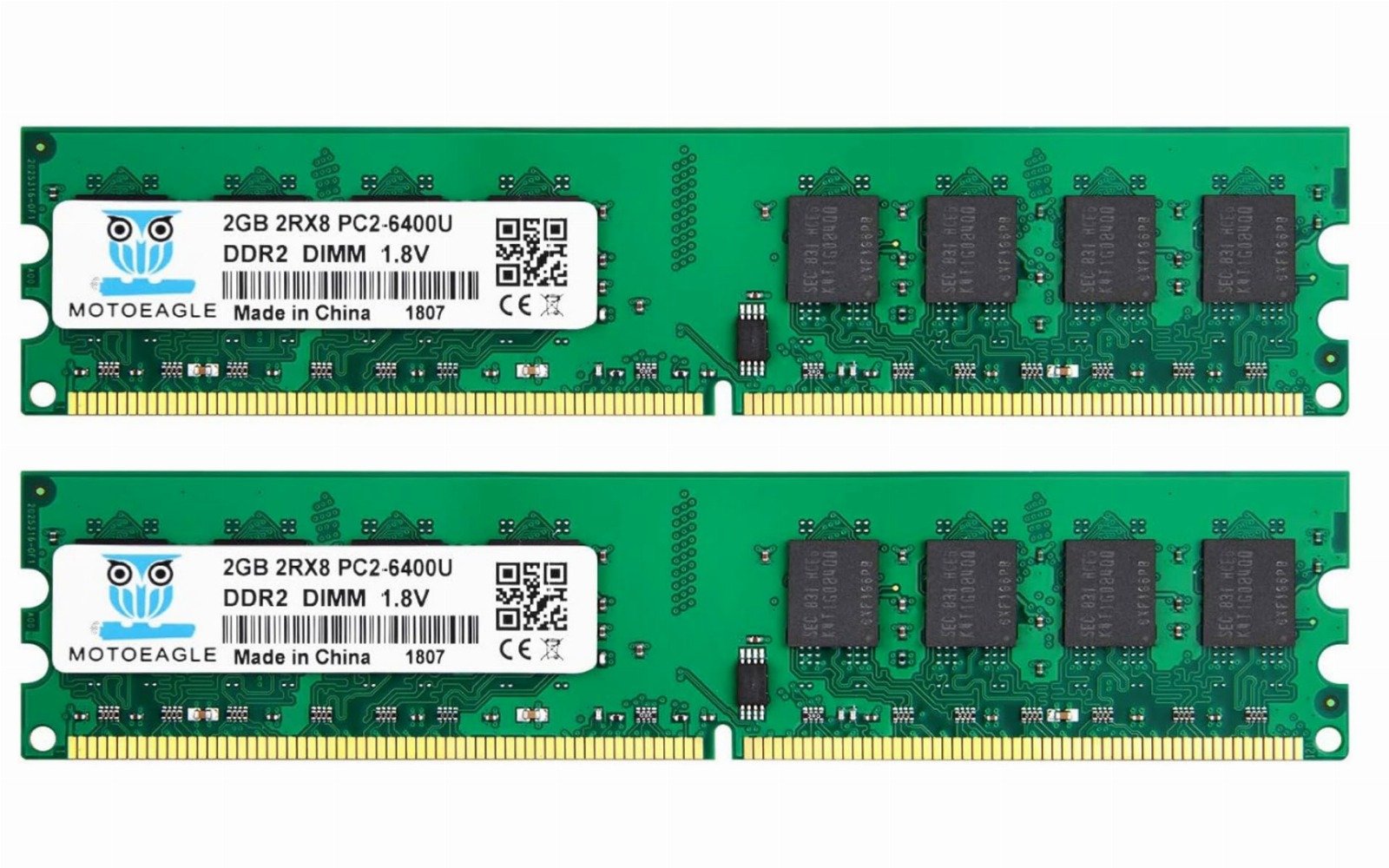
DDR2 RAM (Double Data Rate Type 2) is a type of synchronous dynamic random-access memory introduced around 2003 as an evolution of the original DDR memory. DDR2 was designed to offer higher performance, lower power consumption, and greater memory density than its predecessor. It achieved widespread adoption across desktops, laptops, and servers due to its improved capabilities and efficiency.
DDR2 operates at a lower voltage than DDR (1.8 volts compared to 2.5 volts for DDR), contributing to its energy efficiency. Additionally, DDR2 introduced a new feature called "prefetch buffer," which allows the memory chip to access multiple data points in a single read operation, effectively doubling the data rate without increasing the clock speed. This technology typically offered transfer rates ranging from 400 MHz to 800 MHz, providing significantly better performance compared to DDR.
Pros:
- Enhanced Speed and Bandwidth: DDR2 memory supported higher clock speeds and data transfer rates, improving overall system performance and allowing more robust multitasking and faster application loading.
- Improved Power Efficiency: Lower operational voltage reduced the overall power consumption, which helped in extending the battery life in portable devices and reducing energy costs in data centers.
- Cost-Effectiveness: During its peak usage years, DDR2 provided a good balance between cost and performance, making it an attractive option for many computer users.
Cons:
- Outdated Technology: As newer memory types like DDR3 and DDR4 have become standard, DDR2 has become largely obsolete, with diminishing manufacturer support and availability.
- Compatibility Issues: DDR2 is not compatible with slots for DDR3 or DDR4, limiting upgrade options without significant hardware changes.
- Limited Performance Capabilities: While advanced for its time, DDR2's performance capabilities are considerably lower than those of newer memory technologies, affecting its suitability for modern applications that require high-speed data access and processing.
DDR2 RAM was crucial in the evolution of computing by enhancing the speed and efficiency of systems during its time. However, with advances in technology, newer generations of RAM have replaced DDR2, offering greater speeds, lower power consumption, and larger capacities. DDR2 remains in use in older systems where high-performance computing is not required, serving as a cost-effective solution for less demanding tasks.