
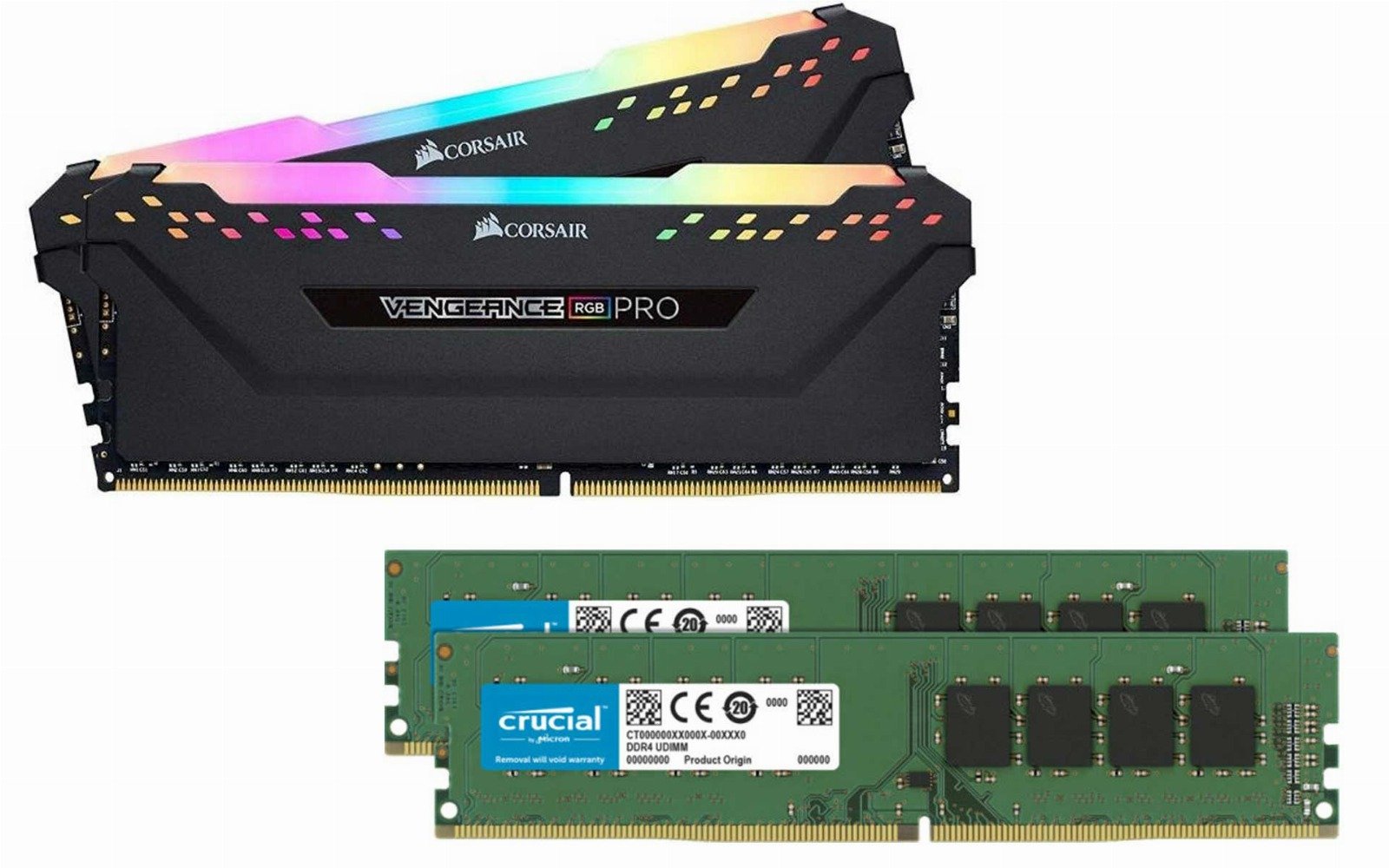
DDR4 (Double Data Rate 4) RAM is the fourth generation of double data rate memory technology, which was introduced in 2014. DDR4 is an advanced type of synchronous dynamic random-access memory (SDRAM) that provides higher module density and lower voltage requirements than its predecessor, DDR3. It is widely used in desktop computers, laptops, and servers due to its improvements in speed and efficiency.
DDR4 RAM operates at a lower voltage of 1.2V compared to DDR3's 1.5V, leading to significant power savings, especially in systems with large amounts of RAM. It also supports higher data rates, starting at 2133 MHz, which is considerably faster than the starting speeds of DDR3. Moreover, DDR4 memory modules are capable of storing more data and are available in larger capacities, which enhances multitasking and improves overall system performance in demanding applications.
Pros:
- Higher Speeds and Bandwidth: DDR4 offers increased speeds and bandwidth compared to DDR3. This allows for more efficient data processing and improved performance in memory-intensive applications.
- Lower Power Consumption: Operating at a lower voltage means DDR4 consumes less power, which can contribute to overall energy efficiency in systems, particularly beneficial in servers and laptops.
- Increased Capacity: DDR4 supports higher densities per module, which means users can install more RAM in their systems, enhancing multitasking capabilities and handling more advanced computing tasks.
Cons:
- Cost: When it first became available, DDR4 RAM was more expensive than DDR3, though the prices have gradually equalized as the technology has matured.
- Compatibility: DDR4 is not backward compatible with older memory slots, which means upgrading to DDR4 often requires also upgrading the motherboard and potentially other components.
- Diminishing Returns: For many everyday computing tasks, the performance improvements offered by DDR4 over DDR3 may not be noticeable to the average user, making the upgrade more relevant for high-performance or professional use cases.
DDR4 RAM represents a significant advancement in memory technology, offering better performance, efficiency, and capacity than earlier memory standards. Its adoption has become widespread in new computer systems, aligning with the ongoing demand for faster and more efficient computing resources in both consumer and professional markets.