
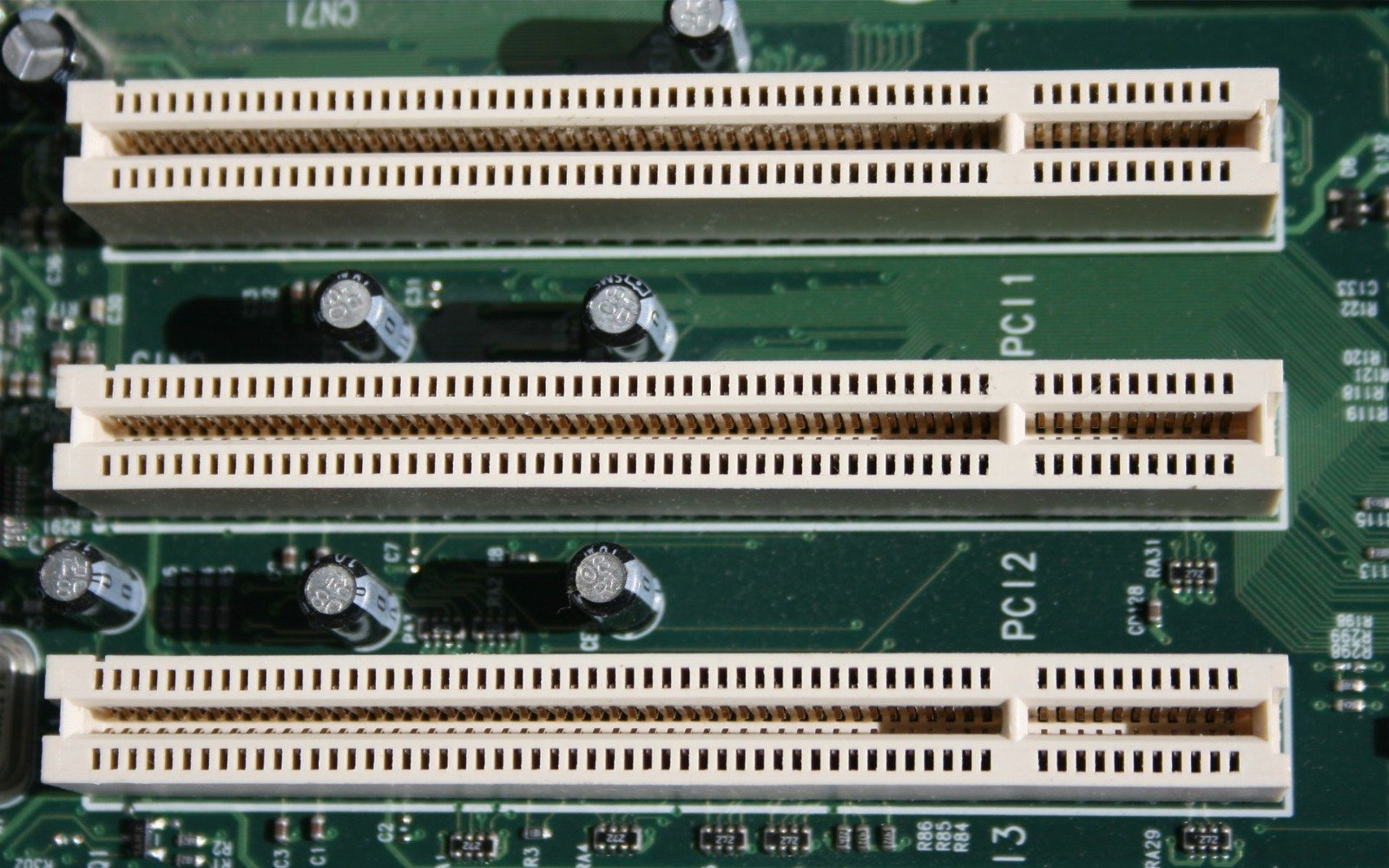
PCI (Peripheral Component Interconnect) is a computer bus standard that was developed by Intel in 1992 to connect peripheral devices to a computer's motherboard. It was widely used in computers to add expansion cards like network cards, sound cards, modems, extra ports, and other peripherals. Before being largely replaced by the faster PCIe (Peripheral Component Interconnect Express) standard, PCI was a key component in enhancing and extending the capabilities of personal computers.
PCI slots on motherboards allowed for direct integration of hardware into the computer’s system, offering a standardized way to provide additional functionalities without major hardware changes. PCI supports bus mastering that allows devices connected to the bus to communicate with each other without going through the CPU, thereby reducing the processing burden and enhancing system efficiency.
Pros:
- Standardization: PCI provided a uniform standard that ensured compatibility across a wide range of devices and systems, simplifying expansion and upgrades.
- Flexibility: The ability to add a variety of cards allowed users to customize their computer systems according to their specific needs, whether for gaming, sound production, or connectivity enhancements.
- Direct Connection: By integrating directly into the system bus, PCI devices could achieve reasonable data transfer speeds sufficient for many applications at the time.
Cons:
- Limited Bandwidth: As computing demands grew, particularly with graphics-intensive applications, the bandwidth limitations of PCI became apparent, leading to bottlenecks.
- Physical Size Constraints: The number and size of PCI slots in computers were limited, which could restrict the number and type of expansions a user could install.
- Superseded by PCIe: With the advent of PCIe, which offers significantly higher speeds and greater flexibility, the older PCI standard has largely been phased out in modern computer design.
Despite being largely replaced by PCIe in new systems, PCI technology laid much of the groundwork for modern expansion card standards and helped facilitate a broad expansion of computer capabilities throughout the 1990s and early 2000s. It remains a significant part of the historical development of computer hardware.