
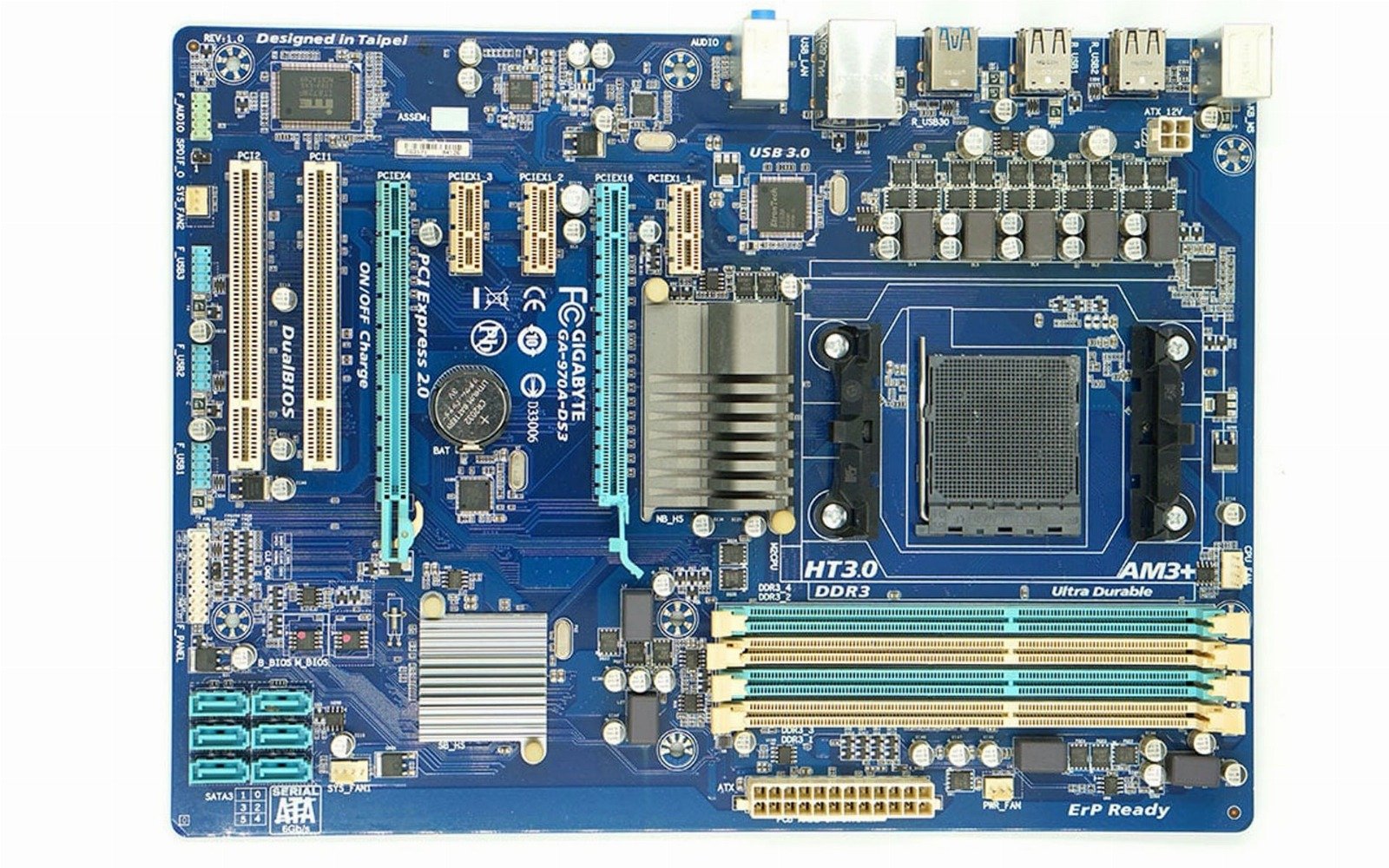
The motherboard, often referred to as the mainboard, system board, or logic board on Apple devices, is the central printed circuit board (PCB) in a computer. It is the primary piece of circuitry into which all other internal components connect, including the CPU (Central Processing Unit), RAM (Random Access Memory), storage devices, and expansion cards such as those for video and audio. The motherboard provides the electrical connections by which the other components of the system communicate.
Motherboards come in various sizes and specifications, which determine the capabilities and limits of the computer. Common motherboard form factors include ATX, MicroATX, Mini-ITX, and EATX, which differ in size, shape, and the number of I/O slots and ports they provide. The design of a motherboard determines many critical features of a computer, such as its expandability, the types of CPUs it can support, the memory capacity, the features it can handle like overclocking capabilities, and more.
Pros:
- Central Connectivity: The motherboard facilitates the connection of all computer components and peripherals, enabling them to interact through the system’s data buses and expansion slots.
- Upgradeability: Depending on the motherboard's specifications, it can offer options for future upgrades such as additional RAM, better CPUs, or more storage.
- Customization: Various motherboard models cater to different needs, from basic computing to complex, multi-GPU gaming setups or server applications, providing consumers with a range of options tailored to specific requirements.
Cons:
- Compatibility Issues: Upgrading components like the CPU may be restricted by the motherboard’s chipset or socket type, limiting the lifespan and expandability of the system.
- Single Point of Failure: As the hub for connecting all components, any issue with the motherboard can affect the entire system, leading to a complete shutdown or failure.
- Cost: High-end motherboards can be expensive, particularly those designed for gaming or server use, which may include advanced features like enhanced power management, support for multiple GPUs, or extensive storage options.
The motherboard is essentially the backbone of a computer, crucial for linking all components and ensuring they work together effectively. Its importance in system architecture cannot be overstated, as it determines the computer's capabilities and potential for future expansion.