
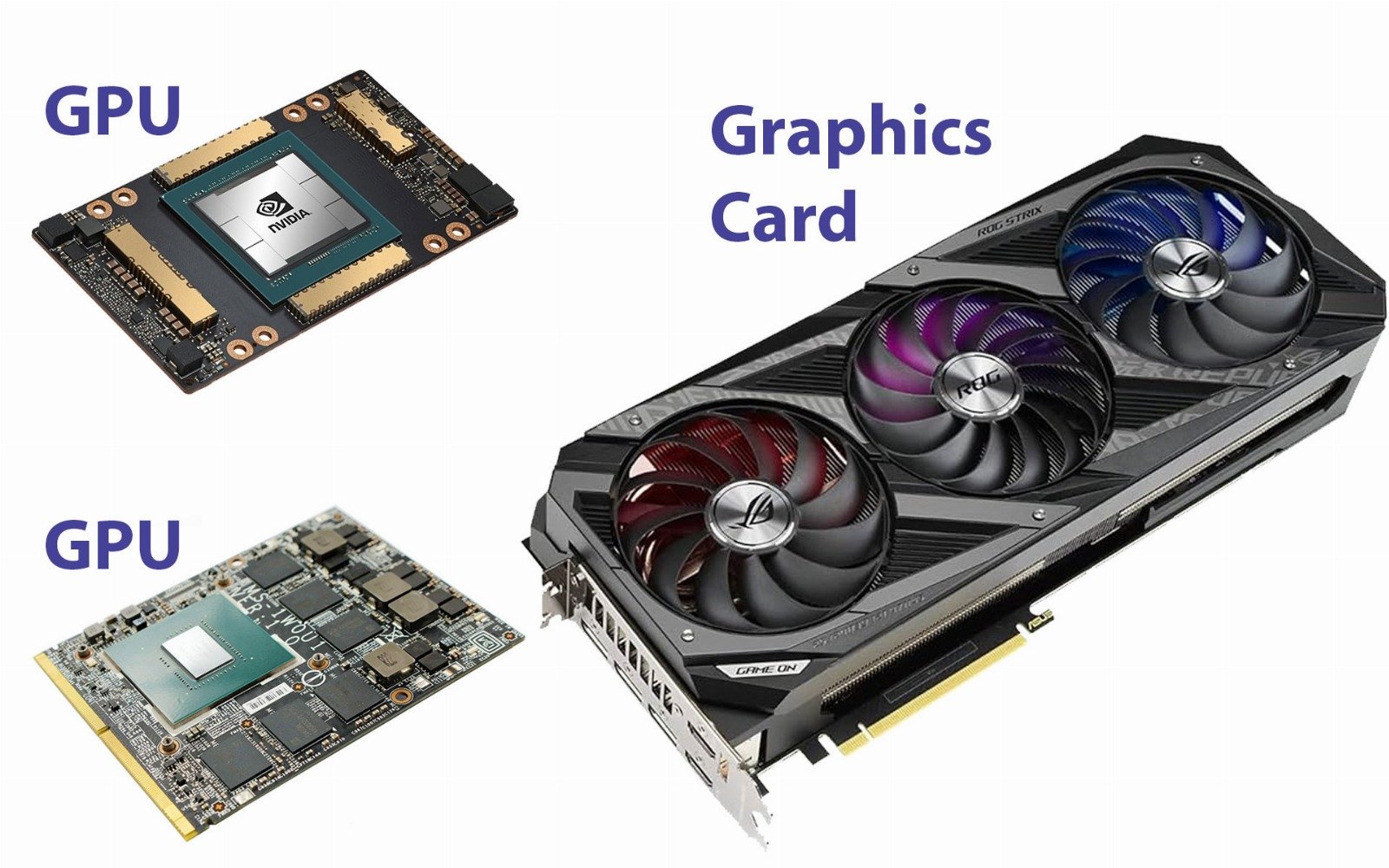
The Graphics Processing Unit (GPU) is a specialized electronic circuit designed to rapidly manipulate and alter memory to accelerate the creation of images in a frame buffer intended for output to a display device. GPUs are used in embedded systems, mobile phones, personal computers, workstations, and game consoles. Modern GPUs are very efficient at manipulating computer graphics and image processing, and their highly parallel structure makes them more effective than general-purpose CPUs for algorithms where the processing of large blocks of data is done in parallel.
In the history of computing, GPUs have been essential in graphics rendering, particularly for 3D graphics. While they were initially used to accelerate the memory-intensive work of texture mapping and rendering polygons, today's GPUs are also highly programmable, offering capabilities akin to CPUs with the added advantage of a parallel architecture optimized for handling multiple computations simultaneously.
The terms GPU and Graphics Card are used almost as synonyms. All Graphics Cards have GPUs, but not all GPUs are Graphics Cards, as they may be part of a computer or laptop Motherboard.
Pros:
- High Performance: GPUs can process many pieces of data simultaneously, making them particularly good for gaming, graphical design, video editing, and scientific computing which require handling large volumes of data.
- Energy Efficiency: When it comes to tasks that are parallelizable, GPUs can deliver significantly more performance per watt than CPUs.
- Versatility: Modern GPUs are increasingly used for non-graphical computing tasks such as machine learning, deep learning, and complex calculations in scientific research, often referred to as GPGPU (General-Purpose computing on Graphics Processing Units).
Cons:
- Cost: High-end GPUs can be very expensive. The cost is especially high for the latest technology or GPUs that cater to enthusiasts and professionals.
- Power Consumption: Powerful GPUs require a lot of energy, which can contribute to higher electricity costs and the need for more robust cooling solutions in computer systems.
- Complexity in Programming: Programming for GPUs to perform non-graphical tasks requires specialized knowledge in parallel programming and understanding of the specific architecture of a GPU.
The development of the GPU has been driven by the increasing demand for realistic 3D graphics in video games, and more recently by the need for speed in computational biology, cryptography, and other computational-intensive tasks. As technology progresses, the role of the GPU is expanding from sheer graphics rendering to broader applications, making it an integral component in modern computing environments.