
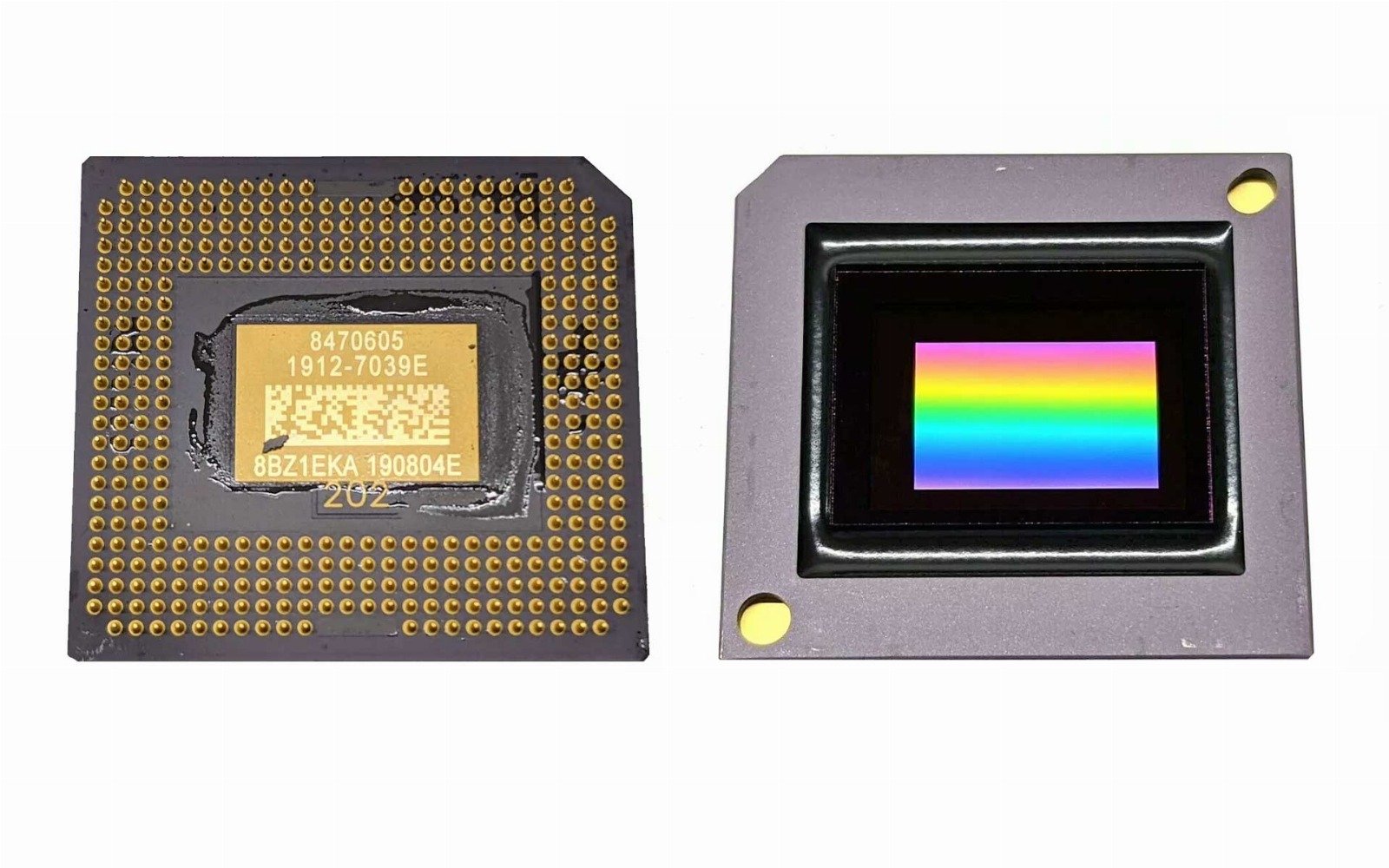
The Digital Micromirror Device (DMD) chip is the core technology used in Digital Light Processing (DLP) projectors and is developed by Texas Instruments. This sophisticated component consists of an array of microscopic mirrors, each one representing a single pixel in the projected image. Depending on the projector's resolution, a DMD chip can contain hundreds of thousands to over a million mirrors, each capable of tilting towards or away from the light source to create a light or dark pixel on the screen.
How It Works: Each mirror on a DMD chip measures less than one-fifth the width of a human hair and is mounted on a tiny hinge that allows it to pivot. When the projector's light source directs light onto the DMD chip, the mirrors tilt to either reflect the light toward the projector lens and onto the screen or away from the lens into a light-absorbing area to create black. These mirrors can switch positions very rapidly, up to thousands of times per second, which allows them to modulate the light and create shades of gray in addition to pure black and white.
Pros:
- High-Speed Performance: The ability of DMD mirrors to tilt at incredible speeds enables very sharp images and video with high frame rates, ideal for detailed visuals and fast-moving scenes.
- High Image Quality: DLP projectors using DMD technology are known for their sharp image quality, reliability, and durability, thanks to the robust mechanical properties of the DMD chip.
- Color Accuracy and Brightness: With advanced color processing and light modulation capabilities, DMD chips contribute to producing vibrant and bright images, making them suitable for various lighting conditions.
Cons:
- Rainbow Effect: In single-chip DLP projectors, some users may notice a "rainbow effect," where brief flashes of rainbow colors appear on the screen due to the rapid rotation of the color wheel.
- Maintenance: While DMD chips themselves require little maintenance, the projectors housing them might need regular upkeep, especially related to dust and heat management to maintain optimal performance.
- Cost: The complexity of manufacturing DMD chips can contribute to a higher cost for DLP projectors compared to other types of projectors, such as LCD.
Conclusion: DMD chips are integral to the performance of DLP projectors, offering distinct advantages in speed, image quality, and reliability. This technology is well-suited for environments that require precise and vivid image projection, from home theaters to business and educational settings. Despite the higher cost and potential for the rainbow effect, the benefits of DMD technology make it a favored choice in many high-end and professional projection solutions.