
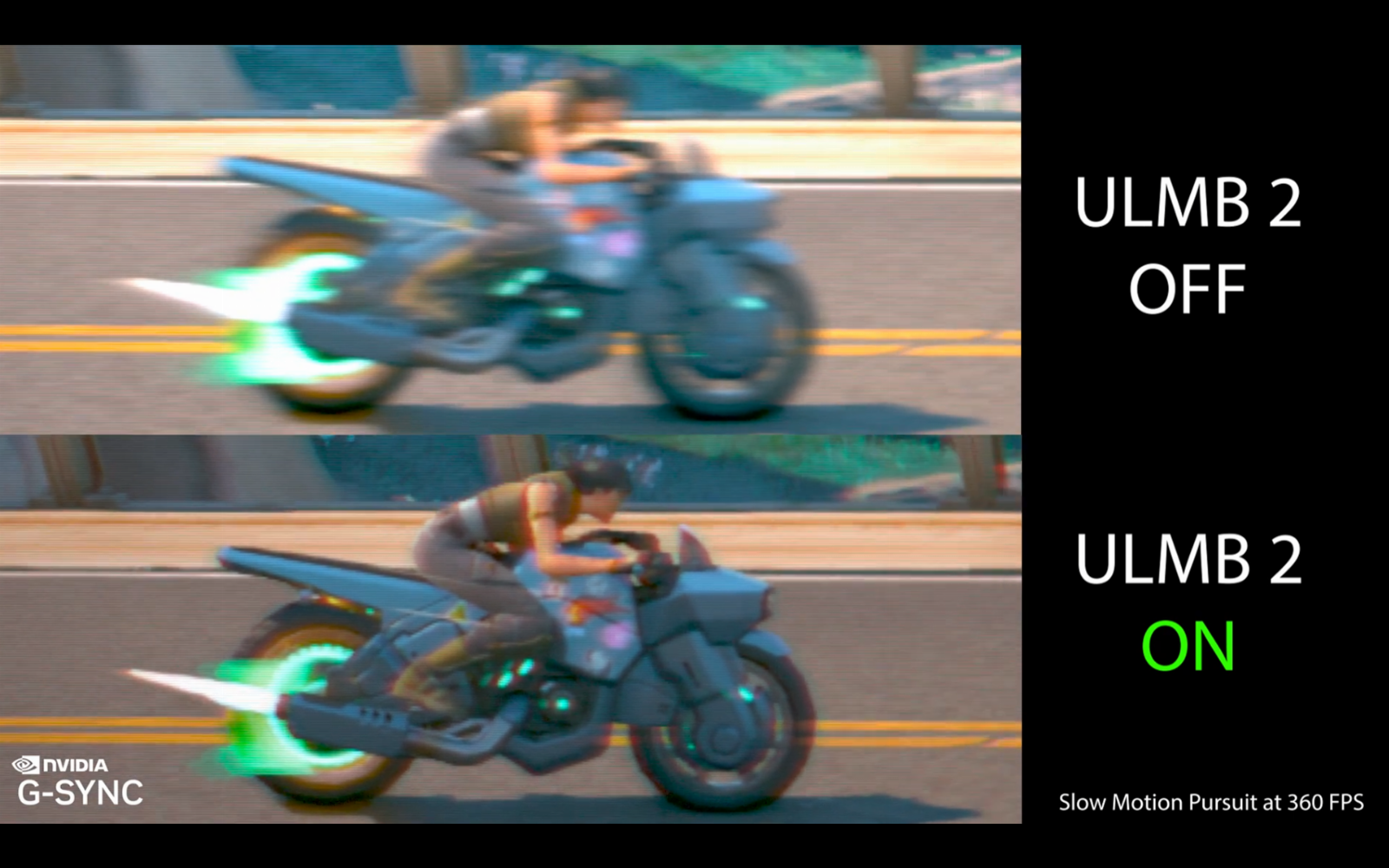
ULMB, or Ultra Low Motion Blur, is a technology used in some LCD monitors, particularly those aimed at gamers, to reduce motion blur by using backlight strobing techniques. When ULMB is enabled, the backlight of the monitor is turned off briefly between frame refreshes. This strobing effect helps to create a crisper, clearer image by reducing the time each frame is displayed, thus minimizing the perceived blur that can occur when objects move quickly across the screen. This technique simulates the effect of a higher refresh rate by reducing the visibility of motion artifacts.
The primary goal of ULMB is to provide a better viewing experience in fast-paced environments, such as competitive video games, where motion clarity is crucial. It's most effective at high refresh rates, such as 120Hz or 144Hz, where the flicker resulting from the strobing is less noticeable. However, because ULMB requires the backlight to flash on and off, it can result in a darker overall image and is generally recommended for use in well-lit environments to counteract this effect.
Pros:
- Increased Clarity in Fast Movements: By reducing the persistence of each frame, ULMB can significantly enhance the clarity and sharpness of moving objects, making it easier to track movements in video games or fast-paced sports.
- Reduction of Motion Sickness: Some users find that reduced motion blur helps mitigate feelings of nausea or discomfort that can occur during fast-paced gaming or video viewing.
- Enhanced Gaming Experience: For competitive gamers, the sharpness and reduced blur can improve reaction times and overall performance in games.
Cons:
- Reduced Brightness: Since the backlight is turned off part of the time, ULMB can make the screen appear dimmer, which may be a disadvantage in darker gaming setups.
- Not Suitable for All Users: Some users may be sensitive to the flickering effect introduced by backlight strobing, potentially causing eye strain or headaches.
- Limited Use with Variable Refresh Rates: ULMB is typically not compatible with variable refresh rate technologies like G-SYNC or FreeSync at the same time, forcing users to choose between smoother frame rates and reduced motion blur.
ULMB provides a useful tool for improving the visual performance of LCD monitors in scenarios where motion clarity is paramount. While it offers significant benefits for specific use cases, particularly in gaming, it does come with trade-offs in terms of brightness and potential viewer discomfort. As display technology evolves, techniques like ULMB continue to play a critical role in addressing the inherent limitations of existing technologies, enhancing the overall user experience for fast-action visual content.