
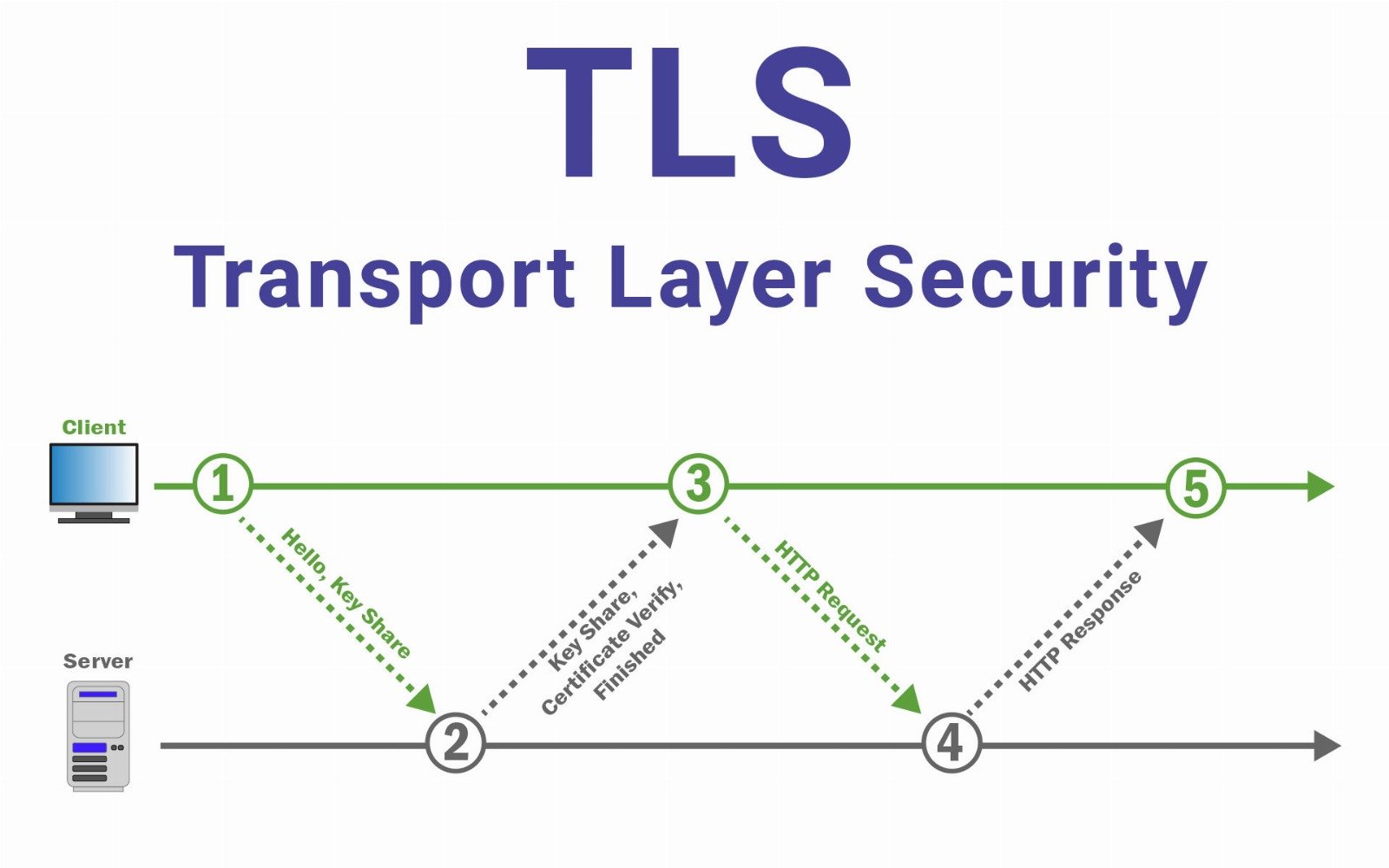
Transport Layer Security (TLS) is a cryptographic protocol that provides secure communication over a computer network, especially the internet. It ensures that data transmitted between two systems — such as a browser and a web server — remains encrypted, authenticated, and tamper-proof. TLS is the successor to the now-obsolete SSL (Secure Sockets Layer) protocol.
TLS is most commonly used in:
- HTTPS websites (
https://) - Email encryption (e.g., SMTP, IMAP, POP3 over TLS)
- VPNs
- VoIP and messaging apps
- Secure file transfers (e.g., FTPS)
TLS operates between the application and transport layers of the OSI model, securing protocols like HTTP, FTP, SMTP, and others.
Key Features of TLS
- Encryption: Ensures that data exchanged between the client and server is unreadable to third parties.
- Authentication: Verifies the identity of the server (and optionally the client) using digital certificates issued by trusted Certificate Authorities (CAs).
- Integrity: Prevents data from being altered or corrupted during transmission via message authentication codes (MACs).
- Handshake Protocol: Establishes a secure session key using asymmetric cryptography (e.g., RSA or ECDHE), then switches to faster symmetric encryption for data transfer.
Pros
- Strong Security: TLS uses state-of-the-art encryption to protect data from eavesdropping, man-in-the-middle (MITM) attacks, and tampering.
- Widely Supported: Supported by all modern web browsers, servers, operating systems, and applications.
- Authentication with Certificates: TLS allows verification of server identity via digital certificates, reducing the risk of fraud and impersonation.
- Performance Optimizations (in TLS 1.3): The latest version of TLS includes faster handshakes and reduced latency, improving page load times and user experience.
Cons
- Configuration Complexity: Poorly configured TLS (e.g., weak ciphers, expired certificates) can still expose systems to vulnerabilities.
- Certificate Management Costs: While free certificates (e.g., Let’s Encrypt) exist, managing and renewing them can be complex or time-consuming for larger infrastructures.
- False Sense of Security: TLS only secures data in transit. It doesn’t protect against compromised endpoints or malicious websites that use HTTPS.
- Encrypted Malware Traffic: Attackers can use TLS to hide malware communication, making it harder for security tools to inspect traffic.
TLS vs SSL
| Feature | SSL | TLS |
|---|---|---|
| Security Level | Outdated and insecure | Strong, modern encryption |
| Latest Version | SSL 3.0 (deprecated) | TLS 1.3 |
| Support | Deprecated by browsers | Standard in all browsers |
TLS has completely replaced SSL in secure communications. Despite this, many people still use the term "SSL" out of habit — for example, referring to “SSL certificates” when they actually mean TLS certificates.
Conclusion
TLS is a cornerstone of secure digital communication, protecting billions of users every day during web browsing, email exchange, and online transactions. When properly implemented, TLS provides strong guarantees of confidentiality, integrity, and authentication. As cyber threats grow more sophisticated, TLS — particularly TLS 1.3 — remains a critical component in any cybersecurity strategy.