
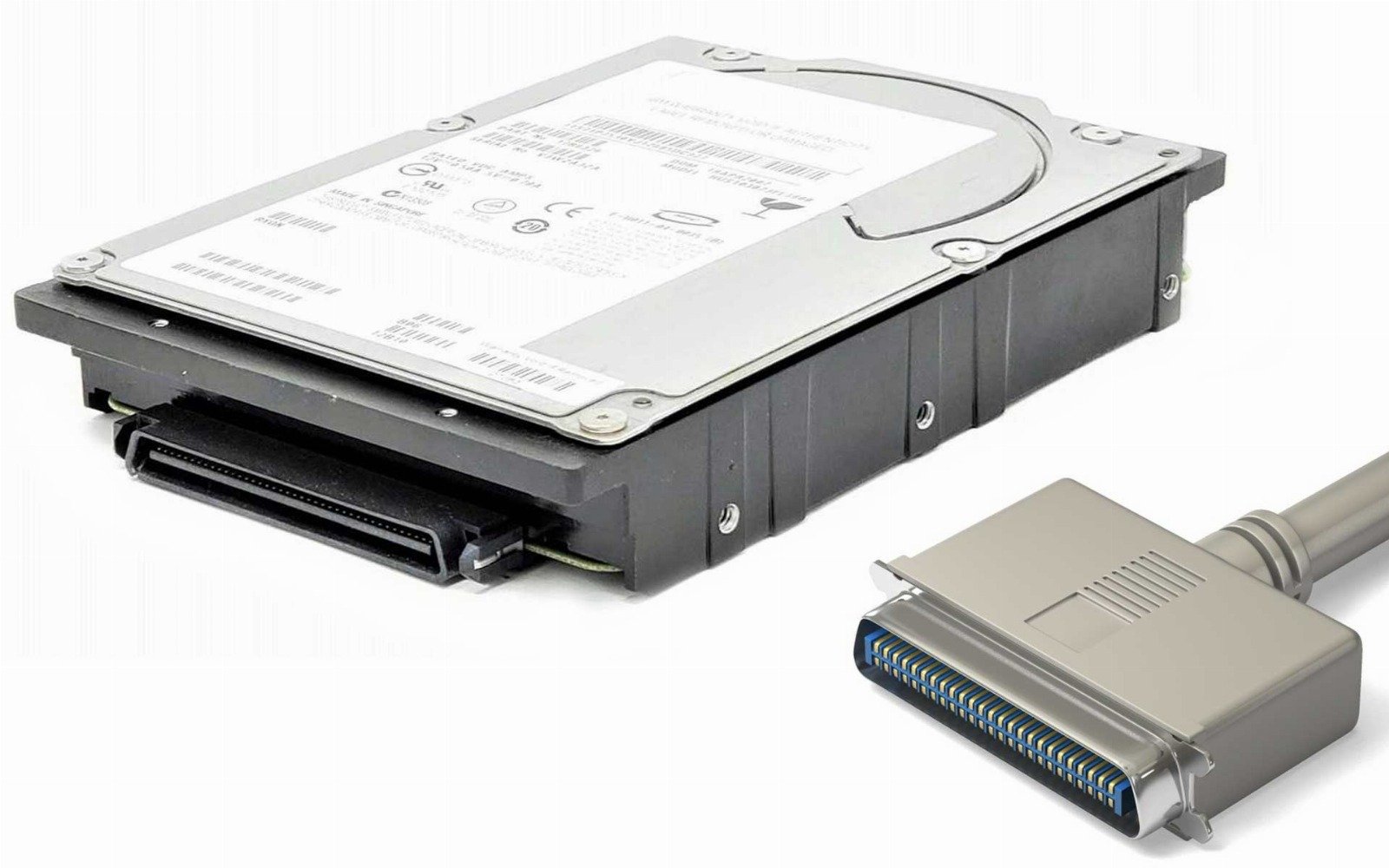
SCSI (Small Computer System Interface) is a set of standards for connecting and transferring data between computers and peripheral devices. SCSI is known for its versatility and performance, supporting a wide range of devices such as hard drives, scanners, printers, and CD drives. The interface was particularly popular in high-performance workstations and servers due to its robust capabilities in handling multiple devices efficiently and its high data transfer speeds compared to earlier technologies.
SCSI interfaces can support up to 16 devices on a single bus, including the host adapter. The devices communicate via a SCSI controller (host adapter), which manages the bus and the flow of data between the devices and the computer. Over the years, SCSI standards have evolved, including SCSI-1, SCSI-2, and SCSI-3, each introducing enhancements such as improved data rates, wider buses, and better command sets. Ultra320 SCSI, one of the later iterations, offers data transfer rates up to 320 MB/s.
Pros:
- High Performance: SCSI can handle multiple devices simultaneously with minimal performance degradation, making it ideal for server environments and multitasking with peripheral devices.
- Flexibility: The SCSI standard supports a wide range of device types, allowing for a diverse and flexible computing setup.
- Reliability: SCSI interfaces are known for their reliability and robustness, which is why they were commonly used in enterprise environments.
Cons:
- Cost: SCSI devices and controllers are typically more expensive than other interfaces like PATA or SATA, reflecting their advanced capabilities and enterprise-focused design.
- Complexity: Setting up and configuring SCSI devices can be complex due to issues like SCSI ID settings, termination, and the need for compatible hardware.
- Obsolescence: With the rise of SATA and SAS (Serial Attached SCSI), traditional parallel SCSI has largely been phased out in new consumer products, though it remains in use in some industrial and legacy systems.
SCSI was crucial in the development of computer storage systems and peripheral device management, especially in demanding environments that required reliable and high-speed data transfer capabilities. While newer technologies have surpassed SCSI in many consumer applications, its impact on the development of storage and device interface standards is significant.