
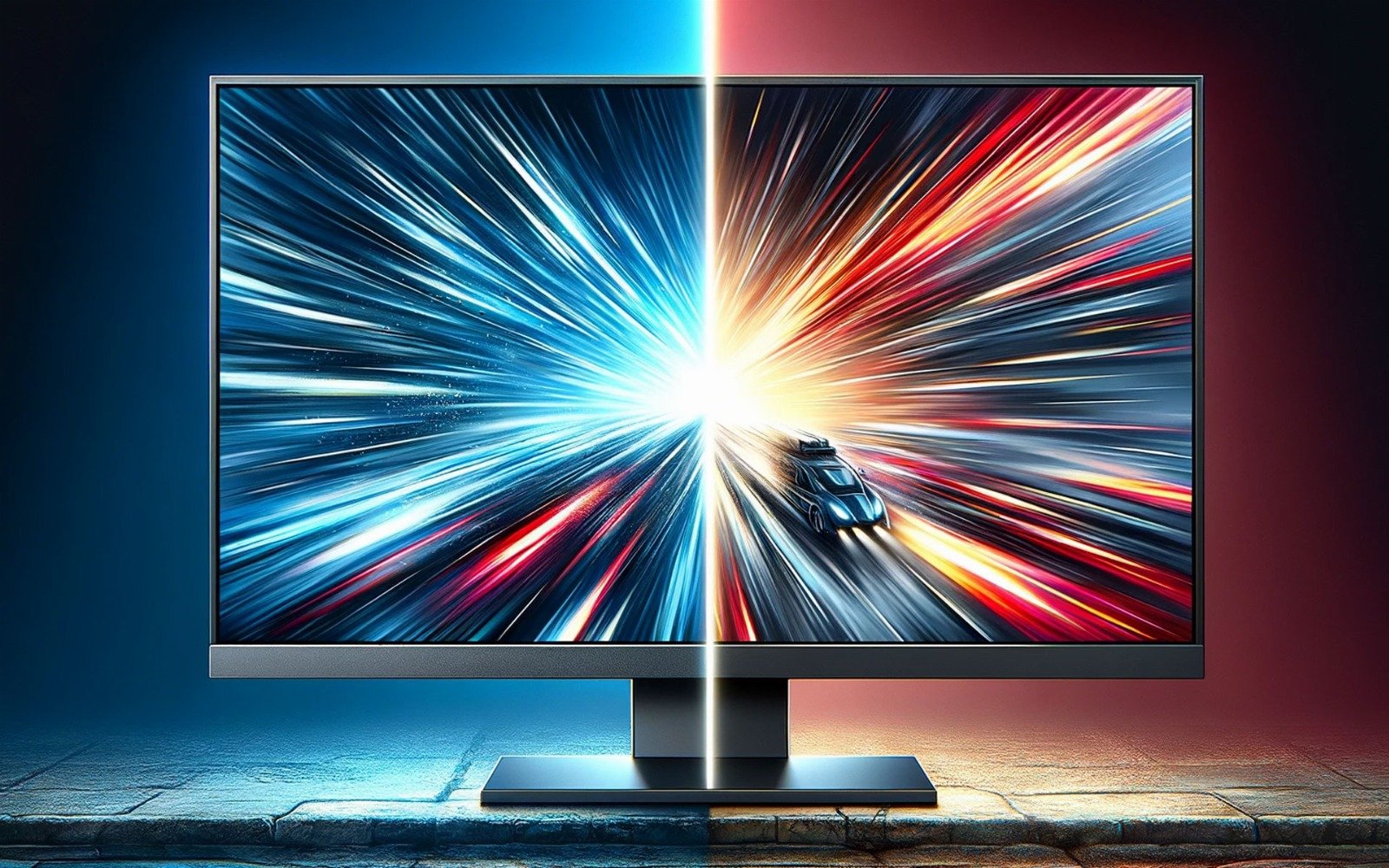
Screen response time is a crucial specification for monitors, TVs, and other display devices, affecting how well a display can render fast-moving images without motion blur or ghosting. The measurement is usually made from black to white to black again (BTW) or between shades of gray (GTG), with GTG being the more common method used today due to its relevance in representing actual visual performance.
Importance
- Gaming: For gamers, a low response time is vital for fast-paced games where quick pixel transitions are necessary to keep motion blur to a minimum. Competitive gamers often seek displays with the lowest possible response time to ensure crisp, clear images during rapid movements.
- Movies and Video: While less critical than for gaming, a low response time can improve the viewing experience by reducing motion artifacts in fast-moving scenes.
- General Use and Productivity: For everyday use and most professional applications, response time is less critical, although extremely high response times can lead to noticeable ghosting even in simple tasks like scrolling through text or moving windows around.
Pros
- Sharper Motion: Reduces motion blur, making moving objects appear clearer and sharper.
- Improved Gaming Experience: Essential for competitive gaming where every millisecond counts, helping to keep the action smooth and responsive.
- Better Video Clarity: Enhances the clarity of fast-moving scenes in movies and videos.
Cons
- Potential Compromise on Other Specs: Manufacturers might prioritize response time at the expense of color accuracy, contrast ratio, or viewing angles.
- Possible Increase in Cost: Displays with very low response times, especially those suitable for gaming, can be more expensive.
Considerations
- The importance of response time varies depending on usage. While crucial for gaming and high-speed video, it's one of many factors to consider when choosing a display, alongside resolution, panel type, color accuracy, contrast ratio, and refresh rate.
- Extremely low response times (1 ms or lower) are most beneficial in competitive gaming scenarios. For general use and non-competitive gaming, a slightly higher response time (up to 5ms) is often imperceptible and can be a good trade-off for better display quality in other areas.
- Technology advancements have led to improvements across all panel types, reducing the gap in response times between them and allowing for a wider range of options for consumers with different priorities and budgets.