
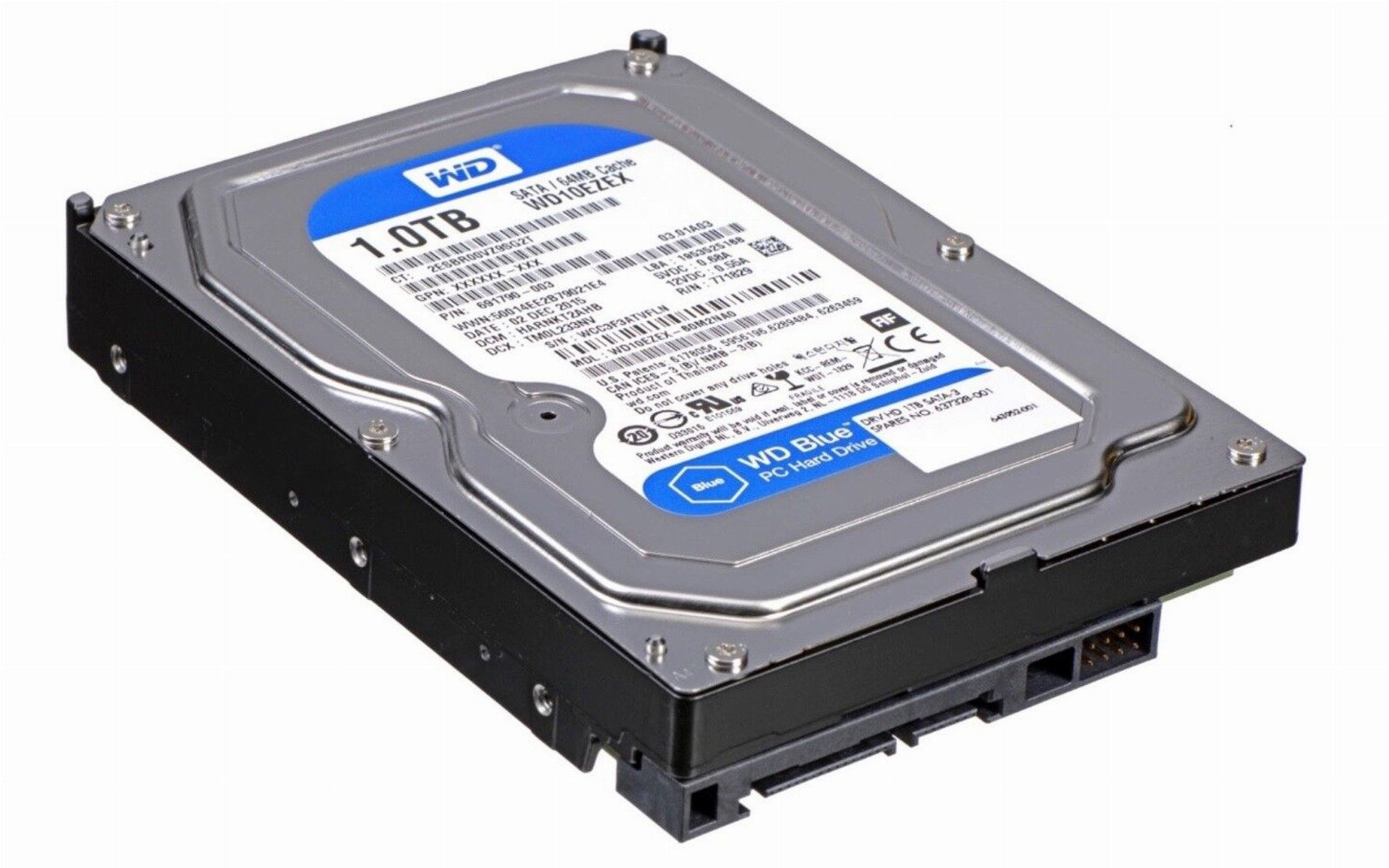
A Hard Disk Drive (HDD) is a traditional data storage device used in computers, servers, and various consumer electronics. It utilizes magnetic storage to store and retrieve digital information using one or more rigid rapidly rotating disks (platters) coated with magnetic material. HDDs are characterized by their ability to retain data even when powered off (non-volatile), making them ideal for long-term data storage.
Introduced by IBM in 1956, HDDs have been the primary storage medium for desktop computers, laptops, and servers for several decades. They operate on the principle of magnetism, where data is written to the disk by rearranging the magnetic domains on the disk surface. The disks spin at high speeds within the drive, and read/write heads on moving actuator arms access the data while the disks are spinning.
Pros:
- Cost-Effectiveness: HDDs generally offer a lower cost per gigabyte than solid-state drives (SSDs) and other forms of storage, making them a cost-effective solution for bulk storage requirements.
- High Storage Capacity: HDDs are available in large capacities, typically ranging from several hundred gigabytes to several terabytes, suitable for storing vast amounts of data.
- Reliability for Storage: With decades of development and use, HDD technology is well-understood and reliable for long-term data storage under normal operating conditions.
Cons:
- Speed Limitations: HDDs are slower in data access and transfer speeds compared to SSDs due to their mechanical parts. This can lead to slower boot times, file access, and data transfer rates.
- Susceptibility to Damage: The moving parts in an HDD make it vulnerable to physical shock and vibration, which can lead to data loss or failure, especially when the device is in use.
- Power Consumption and Noise: HDDs consume more power and can generate noise and heat due to the mechanical movements of the spinning disks and read/write heads.
While HDDs are being gradually replaced by SSDs in many consumer applications due to the latter's faster speeds and declining costs, HDDs remain prevalent in data centers and for archival purposes where large volumes of data need to be stored cost-effectively. Their large capacity and affordability per gigabyte continue to make them a viable option for secondary storage and backup solutions where speed is not the primary concern.