
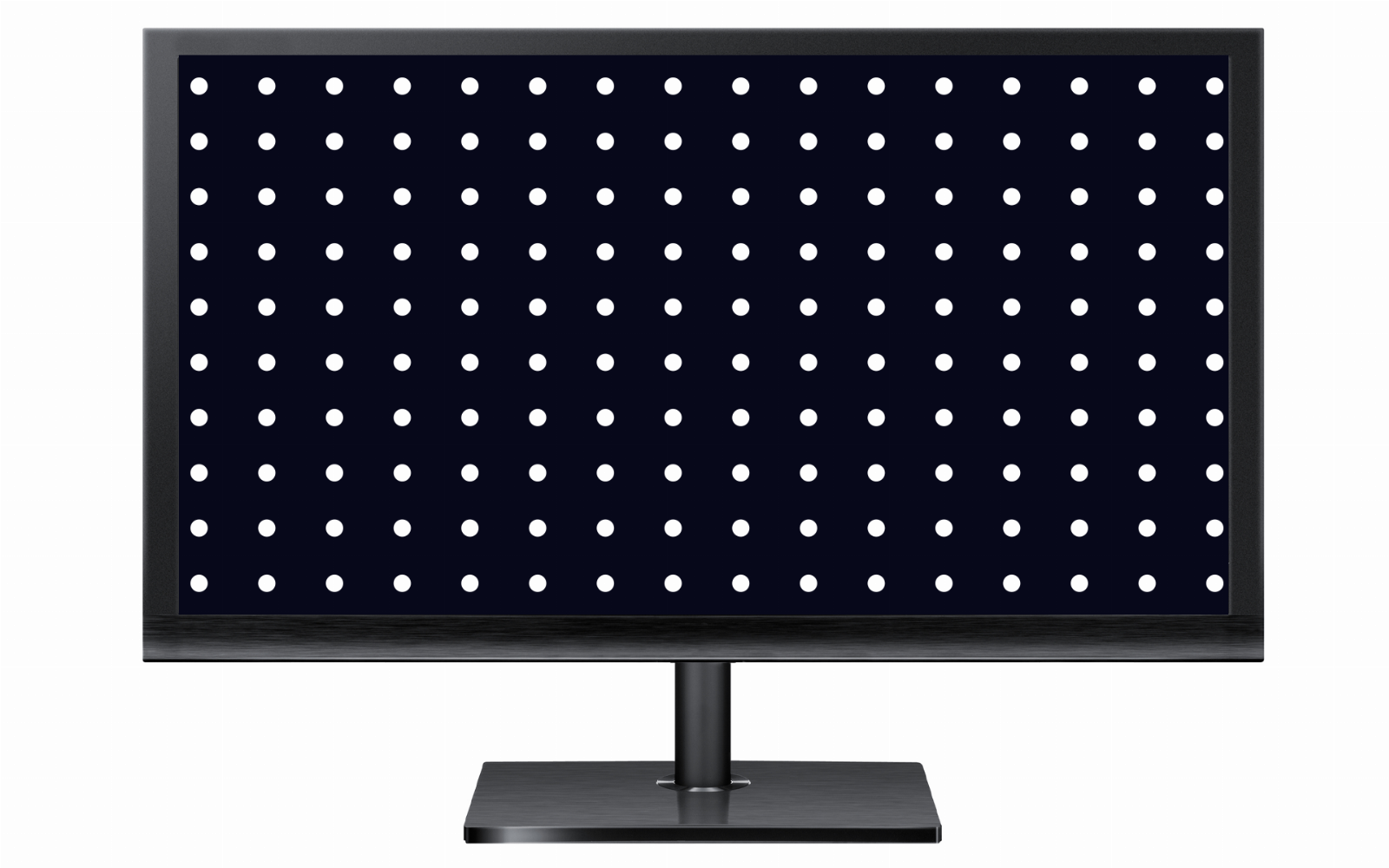
Direct-lit LED technology refers to a backlighting method used in LCD displays where LEDs are placed directly behind the screen, covering the entire back panel. This configuration allows for more uniform lighting across the display compared to edge-lit LEDs, where the LEDs are only located around the edges. Direct-lit LED setups can vary in complexity: some use a basic grid of LEDs, while more advanced versions incorporate local dimming features, where sections of LEDs can be independently dimmed or brightened to enhance black levels and contrast in different areas of the screen.
Direct-lit LED displays tend to be slightly thicker than edge-lit models because the LEDs are spread out across the entire back of the panel. However, this allows for better control of lighting and contrast, significantly enhancing the viewing experience, especially in dark viewing environments. This type of LED backlighting is often found in mid-range to high-end televisions and monitors, particularly those advertising superior picture quality with deeper blacks and higher contrast ratios.
Pros:
- Improved Uniformity: The placement of LEDs across the entire panel ensures more consistent lighting and color uniformity across the display, reducing issues like backlight bleed and clouding.
- Enhanced Contrast and Black Levels: With the capability for local dimming, direct-lit LEDs can achieve higher contrast ratios and deeper blacks by turning off LEDs in dark areas of a scene.
- Better Color Accuracy: The uniform backlighting helps maintain color accuracy and consistency, which is especially important for professional displays and high-quality home theater systems.
Cons:
- Increased Thickness: Compared to edge-lit LED designs, direct-lit LEDs result in thicker display profiles, which may be a drawback for users seeking ultra-slim designs.
- Higher Cost: The addition of more LEDs and complex local dimming technology can make direct-lit LED displays more expensive than their edge-lit counterparts.
- Energy Consumption: Although more efficient than older technologies like CCFL, direct-lit LEDs can consume more energy than edge-lit designs due to the larger number of LEDs in use.
Direct-lit LED technology is ideal for users who prioritize picture quality, particularly in terms of uniformity, contrast, and color accuracy. While they may come with a higher price tag and increased physical depth, the benefits they provide in enhancing the viewing experience are substantial, making them a preferred choice for high-end TVs and critical viewing environments.